Tuesday, 4 August 2015

KMI Session #3 - The Lateral Line

I had a morning KMI session (number 3) with Angela at Structural Balance last week. What an amazing way to start the day/week!

Session #3, according to the KMI 'recipe', is the Lateral Line (LL). Posturally, and in very simple terms, the LL functions to bring balance to our bodies, as well as lateral flexion (bending sideways). Where The Back Line (session #2) primarily supports extension, i.e. standing upright and lifting the body, The Front Line (session #1) primarily supports flexion, i.e. bending over, and the LL brings balance to both those aspects.


"
Anatomy Trains 'recipe' - Session 3
Thomas Myers - Anatomy Trains

Open the Lateral Line, differentiate all four Arm Lines from below, and open laterla aspects of the Deep Front Line at either end of the rib cage

Goals:Open the body's sides, spread the 'wings' of the breath

  • Contact and balance the body's stabilising system
  • Contact the body's 'lateral core'
Key structures:
  • Peroneal fascia
  • Iliotibial tract
  • Lateral ribs
  • Quadratus lumborum and scalene myofascia
"

But of course, there is no exact formula to the art of Structural Integration bodywork and as per the previous session, there was slight deviation from the prescribed 'recipe' based on Angela's assessment of my structure as she read it.

Having already done a good deal of work on my feet and legs in session #2, including both the back and lateral lines already, today's focus was very much the Lateral Lines of the upper body. This included a LOT of work on the ribs! Not really that surprising really considering the upper part of 'The 'Lateral Line' completely surrounds the ribs and intercostals - muscles between the ribs which help move the chest wall and aid our breathing - before connecting into the neck and shoulders. 

As always, Angela does an initial assessment from front, back and both side views. From the front, she noted that my structure was really changing already, as I took a deep breath up into my chest. After assessing me (my structure) from all sides, she had me lay down on the couch on my right side with knees flexed, so she could work on my left side.

I can't remember all the wonderful things she did to my ribs exactly. But Angela had me slowly moving and rotating my shoulder with my arm/elbow above my head while she worked into my ribs, eleasing the tension/restrictions. The sensations were pretty intense, I'm not going to lie, but it also felt good! I could certainly feel the benefit. As always, Angela would come across a bit that was particularly 'stuck' and these are the areas that give the greatest sensations, just bordering on the cusp of being painful, but with no intention to withdraw or have Angela back off despite her regular enquiries as to whether it was too much or if she should back off a bit. 'No, I'm fine!' I replied, while wincing through my breath a little!!

If you have ever had a really deep sports massage, then you will have some idea of the sensations that I am talking about here. Now imagine them in your ribs!!

So she worked on my left side for quite a while, before asking me to get up slowly and see how it felt..........

'Wow!' I think were my exact words as I stood up drawing back my shoulders and puffing up my chest. So much more room to move, more room to breath. It felt so good, especially compared to the right side, which was still very tight and restricted. Even more noticeably given the changes on my left side. I was straight back on the table, keen to get balanced out and have the same feelings of openness in my other side.

After repeating the same treatment on my left side, she then had me lie on my back to finish up around and into my neck. For this area, I just needed to make my head heavy in Angela's hands while she did her thing. The purpose of this technique is to help stabilise and support the head through the axis of the body, so it can be properly supported by our spine and neck, and not recruiting our back and shoulders for this purpose, which is a very common dysfunction in today's society.

Angela then had me sit up, slowly, and then she did the thing she does down my spine to balance out the treatment, repeated twice. I have described this before, she has done it every session and it is just amazing. I must learn this technique myself!!

Finally, she had me stand up to observe my structure after the work she had done on me.

It continues to amaze me how much ones structure can be changed in such a short amount of time during these KMI sessions. Now my right side had actually dropped slightly lower than my left after the session. This could be seen clearly in both my shoulders and my hips as I observed myself in the mirror. 'It's not a problem' she said, 'we'll leave you like that for now and let the treatment settle until I see you next time.'

So it has been a week now since I had this session and the benefits have been very significant for me yet again. I feel so spacious and open in my chest and ribs and can open up my chest so much more now, I can get more air into my lungs!! I know this for a fact as I can now swim an entire length of a 25m pool down under the water. The morning before this session #3, I could only manage 3/4 of the pool. I had no real awareness (in terms of a feeling) of restrictions in my chest/ribs before this session. Compared to other areas of my body that I can really feel the tension and restriction, like my shoulders for example.

Thomas Myers talks about primarily treating the intercostals, the muscles between our ribs, as muscles of walking (supporting the contralateral and rotational forces as we walk), rather than muscles of breathing. It makes total sense as well and I am sure that is the case, but for me personally, I have noticed the biggest benefit in my breath and the expansion of my chest. At least in terms of the ability to intake and hold my breath, so not the act of breathing per say. Maybe that is the differentiator.

The prescribed 'recipe' for session 4 is 'The Spiral Lines'....but given the deviations so far, I think we are deviating here again. I can't remember exactly what she said last time, it's been over a week now since I was there for this session. I think we are going into The Deep Front Line next. I can't wait to find out though!!!

#ThePowerOfPosture
#StructuralIntegration
#KMI


Thursday, 30 July 2015

An update on my progress so far......

It was the 1st May this year that I started on this journey into intentionally improving my posture, so that is nearly 3 months ago now and it seems like a good time for an update on my progress. In that short time, I think the change in myself has been pretty remarkable. I am fast approaching my 40's, I will be 37 this year. But do you know what?....I feel better than I did when in my early 20's! By better, I just mean, fitter and healthier with more energy. Just better all round really.

The most noticeable, unintentional and yet measurable difference for me so far has actually been in my swimming. Yet my goal was never to improve my swimming performance, I have not been 'training' with faster swimming in mind (unlike previous training attempts). I just swim because I enjoy it, yet I feel so much more natural and am much faster in the water than ever before because I am finding more length, rotation and balance in my body. This brings more efficiency and speed from holding a more streamlined position in the water.

demonstrating length and rotation in the water.....

Relieving the cramp in my feet very early on in this process was a huge boost for my swimming, but the gains have continued since then with breathing improvements by enabling greater rib cage expansion and increased thoracic rotation from the postural improvements/correction I have been applying. Breathing and rotation are key factors in swimming........not just in swimming of course, but in life! Both of these key factors are very often overlooked when 'training'. I personally think this could be a big miss if seeking performance improvements in your chosen sport, or more importantly, for life in general.

Other significant and measurable changes are my weight loss. Again, this was never a goal. But by focusing on my posture I am somehow just more motivated to take better care of myself in general. I am not dieting because 'diets' are just not sustainable, but I am just trying to eat real, home made food and cut back on my sugar intake, especially chocolate as I am a total chocoholic. I also keep myself well hydrated and drink lots of water, much more than I ever have before and I always have a glass or bottle to hand. And it is really working as I weigh under 16 stone for the first time since I was about 18 year old. Not that I really care about my weight per say, it is just a measurable and an interesting observation.

I did not take any measurements of my body before I started this process and I am regretting that now to be honest. I especially wish I had measured my height. I am sure I would be slightly taller now through opening up and lengthening my body. From a clothes point of view, I have gone from 38" waist trousers to needing a new hole in my belt to keep up the 36" trousers that I have. Probably 35" would be a good fit about now (if they existed), I've not tried 34" trousers yet. I must have been about 18 the last time I wore 34" trousers. But I'm just using my belt for now though.

One of my only intentional goals and motivations was, and still is, to relieve my bodily aches, pains and grumbles. I am pleased to say that this intentional aspect of the programme is going pretty well too. Lower back pain is gone! 100%.....just gone! Like with my cramp, this was actually quite quick to relieve. My shoulders feel so much better now too with much more range of motion and they don't clunk and grind any more on rotation. I am still tight in my neck and upper back, but improvements are coming here with the help of the KMI work I am having done and my continued postural reprogramming regime. But it is going to take some time to unravel the 20 odd years of dysfunction I have been building on while sitting with my head slumped over my desk.

Improved movement was also another intentional goal and I can certainly move my body better than I can ever remember. Touching my toes is no problem at all now and I have much more freedom of movement in general, shoulder and hip mobility for example, yet increased spinal stability. My balance is also hugely improved because of this.

Throughout all this process of re-training and re-conditioning my body for better posture, there has not been any muscle stiffness or soreness. No D.O.M.S. (delayed onset muscle soreness) caused from over working muscles. Tell a lie, I did strain my wrist practising yoga the other month (a wake up call for me to the dangers of yoga if you overdo it and push too hard) and I also strained my hamstring pushing it a bit hard on my bike the other week. But with an increased bodily awareness and some basic knowledge, I was able to quickly relieve the problems myself with some self myofascial release and specific stretching using the techniques I have been learning about regarding  myofasscia, trigger points and referred pain patterns.

Emotionally, the power of posture continues to be....well.....powerful! This was the biggest unexpected side effect. I just feel good in myself with a really good energy and motivation. I certainly sleep very well and wake up feeling fresh in the morning. Getting out of bed without any bodily groans and grumbles really helps set you up for the day I think! I am still boring everyone with my blog, not that anyone is forced to read it of course. But for the few that do, I hope you are enjoying following along. Thanks for reading!

#ThePowerofPosture


Monday, 20 July 2015

The importance of good posture

I just wanted to add a short post to my blog to summarise and highlight some of the real life benefits and importance of good posture......

Having been focusing on addressing my postural imbalances for nearly 3 months now, I firmly believe that good posture is the absolute key to our general long term health and well being, both physical and emotional, regardless of your lifestyle choices and goals, posture can help you!

Yes, you!.......or 'us' I should say......human beings, that is!! Whilst every person on this planet is so beautifully different and wonderfully unique, we are however all fundamentally the same in our basic design and bio mechanics (genetic diseases and physical disabilities aside of course).

So in simple terms, what can you expect to gain from practising 'good posture'.........

#1......a slimmer waist! Straight away, no diet, no exercise or magic pills or supplements. Just good posture.........and BAM!.....you will slim down in the belly straight away and get the narrower waist that so many people strive to achieve through habitual dieting and exercise programmes. Don't believe me.....? Try this out for yourself........

Look at yourself naked (or in your underwear) in the mirror. Make a note of where you see rolls and folds in the skin/fat. Now....pull yourself up straight, push back your shoulder and let them relax down (don't hunch), breath into and expand your chest growing tall and tighten your tummy ('engage your core'). Now look for the rolls and folds again......Note how they have significantly reduced, if not disappeared completely. Now hold onto that image! With good posture, you can look like that all the time. No exercise, no diet! Just good posture. Not bad eh?? 

You can see the same results here.......


When I say posture can help everyone, in every aspect of their life, from elite sports to couch potatoes and everyone in between....I am not even exaggerating. I picked on a 'slimmer waist' as an example because it is a very common goal in society today that most people who adopt some sort of new diet and exercise programme would be looking to achieve. Weight loss would be up there too I suppose.

But instead of these kind of goals, I would encourage people to try and change their focus slightly and make good posture the ultimate and primary goal, not just for 30, 60 or 90 days (or whatever specified term for the selected 'challenge'), but for life......You might just be very surprised how everything else and other goals you might have had, just kind of falls into place......

Here are some of the benefits that can be reaped by focusing on postural correction and the specific routines and exercises that need to be applied to promote and train your body to naturally hold a good posture........

(Non exhaustive list and in no particular order of priority or importance)
  • Reduce and cure chronic bodily aches, and pains (Lower back pain for example)
  • Improve breathing, by opening up the chest
  • Improved blood flow and circulation
  • Improved flexibility
  • Improved core strength and stability
  • Better balance
  • Reduce stress and depression
  • Improve sleeping
  • Better movement through increased range of motions
  • Relieve muscles cramps
  • Relieve sprains and strains (more importantly, prevent them in the first place!)
  • Massively reduce injury risk (prevention is better than cure)
  • Improved motivation
  • Increased height and length (our bodies become very compressed though poor posture)
  • Hold and project yourself with an air of confidence
  • Increased confidence
  • Increased bodily awareness ('mindfulness'- it's bit of a 'wank word', but is so so important!!)
  • Faster swimming through increased efficiency (longer and more streamlined in the water)
  • Save money from costly body work injury (physio, chiropractor, etc) treatments.
  • There is no pain left to cure!
  • ..................
(the list could go on and on......you name it, and posture can probably help......) 

As I said at the top, I want this post to be a short one, so I'll just leave it there for now!

As always, thanks for reading!

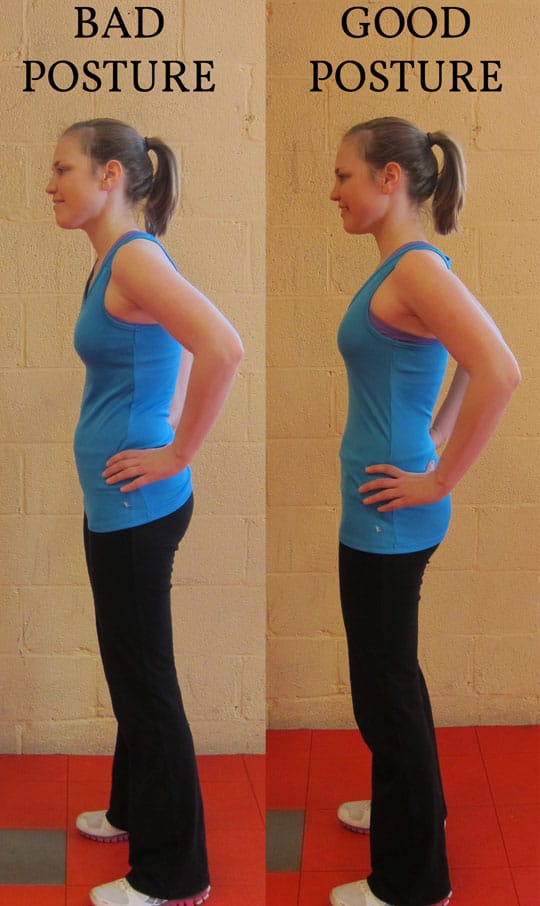
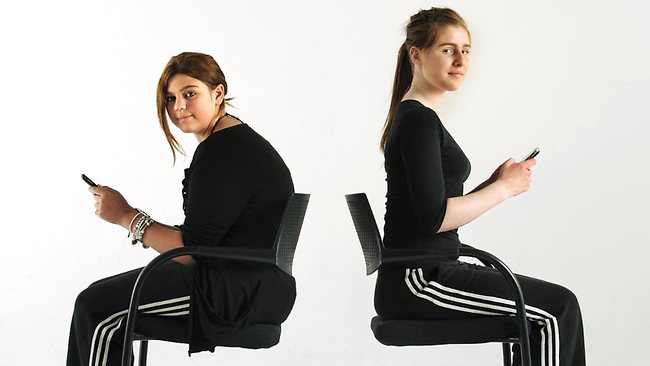
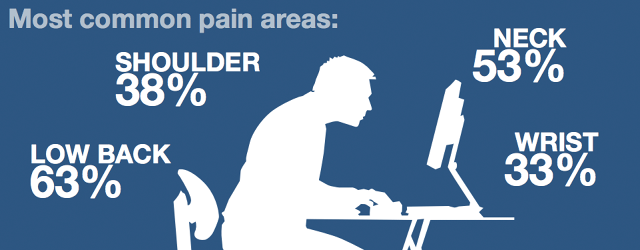
Just to finish off and hopefully give some food for thought........here are some examples of VERY common postural dysfunctions in today's society........human dysfunction being applied and unintentionally trained for a life of chronic pain, discomfort and injury risk!!!!


We start unintentionally training the postural dysfunctions from a very young age!!


#ThePowerOfPosture


Tuesday, 14 July 2015

KMI Session #2 - The Superficial Back Line

I went for my second KMI session with Angela at Structural Balance last week. This is the first chance I have had to update my blog and write about the session.

According to the Anatomy Trains KMI 'recipe' - Session 2 aims to "Open the Superficial Back Line and differentiate the Superficial Back and Deep Back Arm lines from axial body" I am intending to do some more detailed posts on these fascial planes as defined by Thomas Myers' Anatomy Trains, but for now, and just to summarise, this is an extract straight from The Book....(Anatomy Trains)

Overview:
"The Superficial Back Line (SBL) connects and protects the entire posterior surface of the body like a carapace from the bottom of the foot to the top of the head in two pieces - toes to knees, and knees to brow. When the knees are extended, as in standing, the SBL functions as one continuous line of integrated fascia." - Thomas Myers - Anatomy Trains


The goals of session 2 are as follows....

-Deepen the touch into the heavy fascia and endurance fibres of the posterior musculature
-Improve grounding, bringing the client into their legs and feet.
-Bring initial balance to primary and secondary curves
-In general, drop the Superficial Back Line and even the tonus of the Back Arm Lines

These are the 'prescribed' goals for session 2, but as Thomas Myers also states, 'each session differs in emphasis, method and order depending on the client's individual pattern.......' So it is down to the KMI practitioner (Angela) to determine the exact focus of the session based on her observations from visually assessing and manually working on my body.

The session started how session #1 finished, with a wonderful piece of manual therapy to release my spine. Starting at the top of my C Spine (neck), with me in a seated position, Angela positioned herself above me from behind and instructed me to curl myself forward, starting with my head and slowly curving down through each vertebra, gradually lowering myself down towards the floor as I curled. She followed my movement with her hands running down either side of my spine until I was bent over towards the floor. Come back up and repeat! This is just such a wonderful, wonderful thing to experience in itself!

Then she moved onto my feet. She started off with me lying on my back on the table while she did her thing and worked her magic on the undeside  of my feet. Remember this session is The Back Line, so she was working the base of my feet this time. The previous session focussing on The Front Line, she worked the top side of my feet.

As before, Angela instructed me to make subtle movements with my toes at first and then flexing/extending my ankles as she manipulated my fascia. My 'plantar fascia' in this case, which makes up a just small part of The Superficial Back Line. Plantar fasciaitus is a very common diagnosis for foot pain and disorders, often treated by therapists in isolation at the feet and calves. But bear in mind that if you suffer restrictions and dysfunction further up The Superficial Back line, these could well be the root cause of the problems in the feet, so maybe restrictions and tightness in and around the hips for example. Treating plantar fasciaitus in isolation at the source of pain might bring temporary relieve, but if you don't address the hip imbalances first, then very likely, the foot pain will just come back.

Unsurprisingly to me, I had very little movement in my feet. But Angela seemed quite surprised at just quite how 'stuck' everything was. 'I'm going to need to get you on your feet so I can use your body weight to help me get into the fascia'....so having loosened up my feet a bit with me on the table, she then had me stand. She did a quick and very subtle movement assessment to assess the movement in my feet, looking at how my feet pronate (foot rolling in) and supinate (foot rolling out), as I rotated to the left and right through my chest.


A quick thought on pronation and supination while I am talking about the topic......In the running world, you often hear of these terms in the context of running gait; 'over pronation' (rolling your foot in when running) and 'under pronation', or supination (rolling the  foot out). You can buy specially designed foot wear and orthotic insoles to help minimise these compensations and prevent injury when running. Many running shops will do a gate analysis and tell you which type of expensive trainers you should buy for your specific gait. I think on Wiggle you can even sort trainers into these categories for over/under pronation and then for neutral runners (actually how we should all be running). This just seems like a really flawed logic and solution to me now......In my mind, it encourages people to continue running with significant bio mechanical dysfunction, which hugely increases injury risk and running discomfort later on down the road (literally), and will just compound the dysfunction as the body/brain (it's all to do neuromuscular association) is not taught any other way.

Running is a very high impact activity putting a lot of pressure through our joints, and if we are not properly aligned (structurally integrated), then the forces subjected on the joints are even greater. That is why risk of injury is that much higher when running with compensations. I've been through this myself with an osteopath a while back when I was suffering with 'shin splints' from running. I didn't really know anything about this topic back then and was just told that I 'over pronate' and should buy such and such trainers because of it. There was no discussion around WHY I over pronate!!! I wish now that I had asked, mostly because I am curious what the answer would have been. But as this is what a professional was telling me, I went home and spent quite a lot of money on a new pair of trainers for 'over pronators'. But what I can't understand now is .......why not address the root cause of the dysfunction, instead of just compensating for it? Why take a course of action such as buying new trainers or insoles for example, instead of addressing the root cause of the dysfunction and asking 'why do I over or over pronate??'. In my mind, it is a huge injustice to runners! Anyway....back to the KMI.......

So as I was standing and rotating left to right from my chest, she observed that my right foot was more 'stuck' than my left and with that in mind, she went to work on my feet again, instructing me to keep the rotation of my torso from left to right while she worked. I was literally standing on her hands as she worked my feet.

As she worked on the lateral borders of my feet, she explained that she was deviating off the Back Line and was working into my Lateral Line as well today. Opening up the Lateral Line is actually session #3, but as I mentioned above, quoting straight out of the book....'each session differs in emphasis, method and order depending on the client's individual pattern.......'

After she had finished working her magic on my feet, more work on the right foot than left, she had me repeat the basic bilateral movement assessment, rotating left to right again through the chest. I could feel the difference straight away, my feet were allowed to move with me as I rotated my chest from left to right. I could feel it and see it when I looked down at my feet as I moved from left to right. Previously, there has been very little supination in my feet, especially the right foot, as I rotated. But now, I could see it moving with me as I rotated. Amazing!!

She kept me on my feet for a bit, putting me into a unilateral (staggered stance) calf stretch facing and leaning into the wall on my palms, arms outstretched at chest height. While she worked my calves, she had me raise up onto the ball of my feet on my outstretched leg, then lower back down again. This subtle movement creates additional activation of the tissue fibres as she releases them with her hands. As with the previous session, the touch is very focused and the direction always consistent, never any back and forth motions, always unidirectional.

Angela is always asking for feeback from me, is it too much? Is that ok? How does that feel? She would almost wince for me sometimes as she came across a sticky spot. I think I have quite a good tolerance to these kind of sensations though, as I am now pretty experienced at myofascial release and the accompanying sensations. Although, that being said, I have never achieved the same kind of sensations through self myofascial release, compared to when Angela is working on my fascia.

After my calves, she had me walk around a bit to see how they felt........Wow! They just felt so good, so loose and open. When I say 'open', I just mean exactly that.....like my bones, joints and muscles just have more space to move with an increased range of motion. It really is amazing!!

After the calves she put me back on the table again and then went to work on my hamstrings and glutes. Again, queuing me to perform subtle movements to assist with active tissue release as she worked.

She finished off the lower extremities at 'glute med' (the top of my backside!).

Having started the session on my spine, she then skipped ahead to my upper back and shoulders and finally, finishing under my head just below where the skull attaches to the top of the spine. She got her hands under there and had me make my head heavy, cueing me to drop my chin and push my head down into her hands (lengthening my cervical spine) as she manipulated and worked that area, in a kind of circular fashion. That was just lovely! I am going to explore some self myofascial release techniques for this area myself, just because it felt so damn good!

After a quick final stand and pace about, that was the end of session #2.

I left Angela's feeling great and looking forward to session #3. Unfortunately, I didn't have time to go for a walk afterwards this time.

A major observation in myself since last week's session, aside from foot mobility, is how much more shoulder mobility I have now. Some of the exercises I have been practising for postural correction involve a lot of shoulder mobility work, so shoulder protraction/retraction as well as shoulder or scapular depression. But the protraction and retractions are where I have noticed the biggest difference in terms of mobility and range of motion. This in turn has really opened up my chest, allowing more space for breathing!


Next session is #3 and will continue and progress into working on and opening up my lateral lines.

It's funny how after each session so far (all two of them!) I have noticed a huge relieve of tension in certain areas of my body. So far that has been most noticeable around my chest, back, shoulders and feet. However, with that relief, seems to come a new and amplified awareness of the other restrictions which still exist within me. After session #1, my chest/shoulders felt amazing, but I was more acutely aware of the tensions in my upper back.

After session #2, my back and feet felt a lot of relief, but that has now drawn my attention to tension in my neck and upper shoulders. But guess what....session #3 should start to address those areas. Cannot wait!!

In between sessions I am still focusing on my postural correction. Doing some limited myofascial release as and when it feels necessary, but mostly letting the KMI process take care of that for now and am focusing on the corrective exercise aspect, mostly involving a lot of static resistance and isometric muscle contractions. That is where the muscles contract and are activated, but do not change in length, so it is more of a static hold, just like when performing a plank excercise for example. The plank is a great corrective exercise for training good posture and core stability, when properly performed. Mindlessly forcing to hold a plank for 1 minute or more is NOT how to properly perform a plank, your body tells you how long to hold it for so listen to your body - please ignore the ridiculous 30 day plank challenges! But isometric contraction is where it is at!....That is how you fire up the all important stabiliser muscles and they are what is going to support a good and effortless posture.

Thanks for reading!

#ThePowerofPosture
#KMI
#StructuralIntegration


Tuesday, 7 July 2015

Introducing......Functional Patterns.....


I have been working hard for the last couple of months now, with the primary intention and focus of addressing my postural imbalances and dysfunctions. But since starting my blog, I have not yet really given any credit to my main source of inspiration for the programme I am adopting, aside from the title of my blog and a small mention in a previous post.

So I am dedicating this post to Functional Patterns and the man behind the system, Naudi Aguilar.........before I tell you more about this guy and his training system....... I want to show you him in action first.........


I think you will agree.....the way he moves is very impressive. He might make it look easy, but let me assure you, nothing he is doing in this clip is easy! The only way to perform and move like this is to make sure your shit is integrated first. By 'shit'.....I of course mean your posture and alignment. You must be structurally integrated without fascial restriction and all muscles properly activating and operating on their primary functions. You don't want to be performing these kind of dynamic and ballistic movement patterns with any sort of muscular compensation going on in your body. If you don't address your structural imbalances first, it will not be very long before you pick up an injury trying this sort of movement. You have to regress to progress!!

But that is where Naudi stands out. He does not just post up nice looking, professionally filmed and edited videos of himself (as above), busting these advanced movement and metabolic training patterns......no! That would be very self centred and egotistical and that is just not what he or Functional Patterns is about. Far from it! They are simply about making people function better, in life, as humans! You won't find any horrendous  'gym selfies' taken in the FP gym! But what you will find, if you check out his YouTube channel, there is loads and loads and loads of free material and great content on how you can 'integrate your shit'!


Functional Patterns - YouTube Channel

Functional Patterns - website

Functional Patterns - Facebook

Functional Patterns - Instagram

Beyond all the amazing free stuff he posts up, he also has a series of videos 'Human Foundations' and 'Training for Humans' for purchase on his website.....and most recently, a book he has published called 'The Power of Posture'. Sounds familiar......? #ThePowerofPosture

It is this book 'The Power of Posture' and his 'Training for Humans' system that I am adopting into my training.......into my life! With amazing results!!! By far the most amazing results I have ever gained compared to any other sort of training modality or systems I have adopted in the past. And I haven't touched any kind of weights or piece resistance equipment ....not yet at least anyway. My focus has been standing and breathing. A bit boring maybe, but is there anything more 'functional' in life than that?? Releasing fascial restrictions is actually step #1, but that then facilitates better standing and breathing. When was the last time you did some specific training to improve your breathing mechanics?? And I don't just mean just having a high intensity workout.

I have been following Naudi with a lot interest for the last couple of years now. At first....I didn't really get the message he was delivering. I listened, but I didn't really hear it, or perhaps I did, but I didn't really understand it. I just thought he had some pretty cool kettle bell workouts! Which he does(and so much more)....but.....you can't just jump right into them.......and that is what I now understand!

He uses a lot of anatomical terminology and this can be quite overwhelming to begin with. But once you start to understand him (if you don't get it, look it up)..........he makes an awful lot of sense!! If you are into crossfit or traditional strength/weight training, olympic lifting etc, then you are going to find his message quite hard to swallow. You probably won't even listen to him, let alone hear him. You may well just think he is full of shit and ignore him....but that would be your loss! If like me, it will probably take you a while before you actually hear what he is saying and take that Olympic bar off of your back!! For good!!!!

Having been working on my fascial restrictions, posture and breathing for a couple of months myself now....the time for progression is coming....very soon in fact!....and I can't tell you how excited I am to take it to the next level, but of course, never forgetting about the ever so important foundations I have been building upon.....and will continue to build on.

I talked in a previous post about Structural Integration or SI (more specifically KMI). Well, Functional Patterns is a new and slightly different form of SI. It encompasses all integration aspects through self myofasical release and corrective exercise, but then takes it to the next level so that once your shit is integrated, you can implement some movement patterns into your training that will help you to keep functioning well as a human being and seriously limiting your risk of injury, whatever you choose to do! That is my goal now.......I don't want to loose weight, I don't want a six pack, I don't want big shoulders and arms, I certainly don't give a shit how much I can bench or squat......I just want to function well as a human being in normal life.......for the rest of my life. How ever long that may be!

If I am blessed enough to live as long as my Grandma, who will be 90 this year, then I want to be able to wipe my own backside and get up out of my own seat without the need for aids and assistance. That is what Functional Patterns can do for you. I really believe that it is that powerful. Slight correction.......I think well maintained and healthy myofascia, good posture and bio mechanics is that powerful, but this system pays total respect to all of those fundamental elements!

This is how powerful it can be...............

#ShowMeDon'tTellMe


INSTAGRAM: WWW.INSTAGRAM.COM/FUNCTIONALPATTERNS Working with Arizona Diamondbacks prospect Danny Moskovits, addressing more biomechnical deficiencies at their foundation. We had gotten in some work last week and for the first time in a while he had thrown over 60 pitches for his training. He noticed no pain in his shoulders or tightness in his hips throwing hard for as long as he did, which was a big gain in relation to what his prior issues were, but I noticed a ridiculous scapular/pelvis/ribcage/cervical asymmetry and rotation. As a result, his body felt ok but somewhat stiff and restricted. Ran some FP structural integration exercises(with very little MFR) and he walked out the door a new man! I can't say enough about this kid and I'm really looking forward to watching him grow inside these doors. Great work Danny!!! For more info, visit: www.functionalpatterns.com #functionalpatterns #functionaltraining #trainingforhumans #athletesarehumanstoo #trainingtilim100 #doyouevenrotatebro #douevenFPBRO #sandiego #seattle #fitness #fascia
A photo posted by Functional Patterns (@functionalpatterns) on


Progressing to bad ass moves like this.......dynamic, multi plane, rotational and ballistic training patterns. Nothing static or isolated! This is.........Functional Patterns!!!!.........


#RotationRotationRotationRotationRotationRotationRotationRotationRotationRotationRotationRotationRotationRotationRotationRotationRotationRotationRotationRotationRotationRotationRotationRotationRotationRotationRotationRotationRotationRotationRotationRotationRotationRotationRotationRotationRotationRotationRotationRotationRotationRotationRotationRotationRotationRotationRotationRotationRotationRotationRotationRotationRotationRotationRotationRotationRotationRotationRotationRotationRotationRotationRotationRotationRotationRotationRotationRotationRotationRotationRotationRotationRotationRotationRotationRotationRotationRotationRotationRotationRotationRotationRotationRotation.....

#ThePowerofPosture
#FunctionalPatterns
#StructuralIntegration

#TrainIntentionallyNotHabitually


Friday, 3 July 2015

Mobilisers vs Stabilisers and Muscular Compensation

The muscles in our body can be classified into two different categories....mobilisers and stabilisers.

Fairly descriptive and self explanatory terms really; the mobilisers are the bigger and more powerful muscles in the body that we call upon for mobility, motion and power. Such as the quadriceps in our legs and bi-ceps in our arms, for example

The stabilisers on the other hand, are the smaller and more subtle muscles of the body and they are what provide stability, control our movement and give us all important balance in our bodies! Not just balance as in standing on one leg, but also muscular balance. Examples of stabiliser muscles include the erector spinae (muscles that surround and stabilise the spine) and transverse abdominis or TVA for example. NOT the highly regarded 'six pack' ab muslces (Rectus Abdominis), but the slightly deeper abdominal muscles that run across the body, hence 'transverse'.

It is very common for people, myself included, to train and focus on the big mobiliser muscles. But completely forget, or at least seriously neglect the stabilisers.

But forget the stabilisers at your peril!! Here's one good reason why that is......

The rotator cuff is a group of muscles that stabilises the shoulder. They are The Stabilisers of the shoulder and are often overlooked in weight/strength training. Instead, people tend to focus on training the bigger muscles of the shoulders/back with loaded arm extensions and over head bar raises for example. That's fine of course, IF you want to build big/strong mobilisers like the deltoids (shoulder muscles) and nothing else.....but what good are big/strong deltoids, if you then suffer a rotator cuff tear???? I don't think you'll be doing anything overhead with your arms after tearing the tendons in the rotator cuff, let alone lifting any weights, for quite some time!

One could be looking at potential shoulder surgery and a lengthy rehabilitation programme to regain strength back!! Now that might not be your goal in training while you are in the gym raising big weights above your head in an effort to get 'strong', but that is very likely going to be the eventual outcome if you ignore your stabilisers!!!

Since starting my journey into The Power of Posture (2 months ago now), my training focus has completely changed and I am much more mindful of my body and how I use it and what I do to it. My focus and primary goal/motivation is simply good posture and the movement efficiency that comes from it. Nothing else!

So as I understand more about 'mobilisers' and 'stabilisers' and have learned more about my body and functional anatomy, I realised it was the stabilisers I was now working and trying to unlock, activate and train in an effort to correct my muscular and postural dysfunctions. Especially the stabilisers that relate to good upright posture, so my TVA and erector spinae (among others) for example, so that they can properly play their role in supporting my spine.

I have not really got to my shoulder complex yet as I am still working mostly around the hips and lower extremities for the time being. But I am certainly not muscling big weights above my head, so I don't have to worry too much about strengthening my rotator cuff at this time....but that will come in due course. Hips have to be the initial and primary focus when your goal is good posture.

I now also understand that the reason my mobiliser muscles are generally so tight and restricted.....(so tight quads, hamstrings and calves for example!) If you do not have a good solid base (a foundation) in your stabiliser muscles, then the mobiliser muscles have to overwork and compensate for them. To avoid muscular compensation, you need to have muscular balance. Compensation makes muscles work harder that they should be, recruiting on secondary functions, so they get tired and tight in response to compensating for poor stabiliser activation. After tightness and restriction comes injury in the form of tears/soft tissue damage, as described with the rotator cuff example above. There are many other examples of these type of muscular compensation injuries all over our bodies. I hope that makes sense?

Once I have re-aligned myself and rid myself of restrictions, dysfunction and the muscular compensations that I have been building on over the years, I can then start to think about training my mobilisers again. But, I will not be training anything in isolation, so no back squats or arm raises or chest presses for me......ever again! Why just train mobilisers on their own?? It just doesn't make logical sense...at least not to me now. Why not train stabilisers and mobilisers together at the same, just like how we use them in real life......??? Radical concept maybe? I don't think so!

Thanks for reading! I'll leave you with this beautiful piece of spoken word, music and human movement. This is how I aspire to be able to move myself.....one day!......I have a really long way to go!!!


#ThePowerofPosture
#Stabilisers


Tuesday, 30 June 2015

KMI Session #1 - Assessment and The Superficial Front Line

I introduced the amazing body work concept and methodology of Structural Integration and KMI in my previous blog post......

Last week I went for my first KMI assessment with Angela, from Structural Balance.

I was already excited about seeing Angela, having found a real connection with my body and experienced the huge benefits of working with my own fascia, through self myo fascial release. But I knew that I had not even scratched the surface compared to what Angela could do for me and my body, with the knowledge and magic she holds in her hands, what could she unlock and open up!?

So I arrived for my assessment, she works from her home in Leamington Spa. We went up to her treatment room and must have just chatted for at least 20 minutes about my goals, my blog, my general health and history, MyoFascia, Anatomy Trains, Functional Patterns etc....it was great to talk to someone who totally gets it. Then she had me strip down to my underwear so that she could assess my body.....assess my structure!

Starting from the front view......"just stand relaxed and take some deep breaths" she instructed. My chest apparently expanded quite nicely and my horizontal alignment was pretty good. The main observations were around hyper extension in my knees and also slight external rotation of my femurs, a classic cause (or at least part of the cause) of over pronated feet.... 'duck feet'.

Then from the side, not too much to note here.....except the knees again, but actually, my posture is quite good. I've been working pretty hard on it recently, so I was pleased by that.

Then from behind, so she could observe my back line...........'oh'.......she said.......'your back tells me quite a different story!'

I knew this would be the case! I can feel the tension I carry in my neck, shoulders and back pretty much all of the time, and this was one of my main motivations for wanting to 'fix myself'. Caused primarily from slumping my head over a desk for most of my life.

She could see the tension in my back, especially up into my neck, also observed from the side. She had not laid a finger on my body yet. But from this posterior assessment, she also noticed a slight horizontal imbalance in my hips. Coming round behind me, she stood directly behind and firmly rested her fingers on the top of my hips as we observed my body in the mirror. Certainly there seemed to be a slight raise in my left hip, not much, but certainly a subtle difference.

Finally, she placed her hand on my back as I breathed. Observing cervical, then thoracic and lumbar regions. She was feeling how my breath traveled through my body. It was fairly high in my chest, not quite making it all the way down to my lumbar.

And that was basically the end of my assessment......no movement analysis or anything like that, no squats or lunges, or flexibility assessment. Just simple observations around how I stand, how I hold myself and what my structure is like. Sorry, I lie, she did ask if I could touch my toes....which I can't! So I showed her!

"Okay, would you like to go ahead with a treatment?", she asked.

Not that she needed to,,,,I was signed up for this before I even got there.

"YES!!!" Of course, was my reply.

"Okay, so this is session 1.....'The Superficial Front Line'. Get on the table and lie on your back for me"

The Superficial Front Line
as mapped by Thomas Myers - Anatomy Trains


She started at my feet....the top of my feet, not the soles...that will come later on (The Back Line), but this session is just the Front Line (as above), so it's just the top of my feet for this session.

The technique a KMI practitioner will use on your body is nothing like a typical massage that you might have had yourself before as part of a spa treatment, or even physio and sports massages etc. As I mentioned in my previous post about Structural Integration, they work very precisely with your fascia. Yes, they touch you with their hands, mostly just fingers/thumbs actually because it is that precise. But that is where the similarity to a 'normal' massage pretty much ends.

Aside from the precision applied by their touch, they will also ask you to move your body with them as they work on you, to help ease the fascial restrictions, so with my feet for example, she had me slowly flex and extend my toes while she worked them...then progressing to flexion and extension from the ankle. The best way I can describe the feeling......(I'm not very good at this)....but it felt like she was pushing the restrictions in my feet away from toes towards my ankles. It was like a slow, but forceful, stroking of the feet away from the toes towards the ankles. She never went from my ankle back to my feet, always toes to ankle. And that was true for the whole treatment actually...she literally worked UP my body, never down! With one exception, but I will get to that.

So after my feet, she moved onto my shins and knees. I think she was going up either side of my tib/fib bones and in between as well, but I don't really know. Pushing those restrictions up and out of my body. Her touch and observation was amazing. She would hit a tight spot...I could feel the sensations myself from within, but she could feel that with her touch. Amazing! "This bit's really stuck she said, half way up my shin" and she must have worked over the same spot at least 5 times before continuing on up my leg to my knees.

She then kind of circled around my knees, which felt pretty good. Then she got to my quads!........

I am going to digress for a moment, just to talk about the quads, or quadriceps. As the name suggests, this is not just one big muscle of the thigh, but a complex of four individual muscles. Rectus femoris, vastus lateralis, vastus medialis and vastus intermedius, in case you wondering. They are powerful muslces that extend the knee, but also flex the hip as well, at least, rectus femoris does. Anyway...I digress too much now....my point is really just that they are separate muscles, held and separated by Fascia! Even though they work towards common goals, they should be able to glide smoothly past one an another when in motion, lubricated by this wonderful soft tissue web of fluid elasticity (Fascia). At least they should......... if you do not have any Fascial restrictions......guess what? I have some restrictions in my quads!

Now I've been working my quads quite a lot myself recently with my various collection of devices, rollers and balls, so I knew they were very tight, but I also knew I had made some progress into relieving some tension already, as I had improved range of motion and flexibility. But not according to Angela.....

"Your quads are very stuck she said. Literally stuck together, there's no movement between them".....and she went on to explain how there should be......

So she worked up my quads, as I slowly flexed and extended my knee, just so it raised around 5-6 inches off the table, as she worked on the restrictions in my quads....pushing them hard up my body, towards my hips. It almost felt like she pushed those restrictions out at my hips!

Then she worked on my belly. I have never had my belly massaged before that I can remember. Felt strange, but also amazing. I said to her that I'd never felt anything quite like that before!...as she did whatever it was she was doing......"no" she said, "you wouldn't have!"

After the belly, she worked my chest. For the chest she had me fully extend my arm in line with my shoulder, one side at a time, as I gently flexed my arm against the gentle pull of a resistance band while she worked between my ribs, releasing the restrictions from the inside out. She repeated this several times before moving onto to the other side and it really felt like she was pushing these restrictions, literally out of my body!

The sensations are hard to describe, electrical and tingling are the adjectives that spring to mind. Painful, you might say?....under different circumstances the sensations could certainly be interpreted as pain. But the words of Thomas Myers are stuck in my head on the topic of pain, in the context of myofascial release...."pain: is sensation accompanied by the motor response to withdraw"....and because I knew the benefit, so there was no withdrawal response. Angela would frequently ask if I was ok with the level of pressure and pain, "do I need to back off?", she would ask, as I ohh'd and ahh'ed!

Apparently, some of her clients do find the experience too painful to bear in the first instance. In these cases, she would refer them for a holistic acupuncture treatment before coming back to her for the KMI work. And that does the trick. Very interesting I thought!!!

This KMI process is going to be as much a learning experience for me, as well the actual physical Structural Integration aspect.

So after my chest, that was basically the end of session 1 and she was done with my Front Line for now. I should add...that's just my 'superficial' front line. Future sessions will go even deeper on the front!!!!

"Just get yourself up off the table slowly and stand up when you feel ready". She said.

I was not drowsy or light headed......I felt fine. So I stood up!

WOW!!!!! My chest, my shoulders!!! Oh wow! So open. I felt taller, bigger, more 'puffed up'...not in bloated kind of way. In a powerful kind of way. I rolled my shoulders back. It just felt so........goooooood!

To finish off and to "balance me out" a little. Angela asked me sit down. She then did this thing down my back with her hands either side of my spine, following my movement from my neck as I gradually curved my head, down through the cervial spine, to thoarcic and all the way down the lumbar vertebrae until I was bent over with my hands on the floor. Then she sat me up and repeated the process. Lovely.....it was just a lovely to finish the session!!!

Angela lives on the edge of Leamington Spa and her road ends in the glorious Warwickshire countryside, so after the treatment I took a walk, for about 30-45 minutes. She actaully recommends this on her website, to allow the "treatment to settle". Another reason for taking the afternoon off work.

I really enjoyed the walk, it was a lovely day and walked along feeling, the only way I can describe it, just more open to move......and that was just session 1. What will my body feel like after session #12??!

The following morning I woke up and got up out of bed, I actually felt like I had a different body. Usually, my feet click quite a lot when I walk, just clicking joints, nothing painful ,it's never bothered me, but I've always kind of noticed it.......well...not anymore!

But the most significant change to note, was my shoulders! Of recent years, they have always kind of 'clunked' in the joint on rotation. I have discussed this with physio's in the past and was told that the shoulder joint is a fairly weak and vulnerable complex. The clunking in the joint is just deterioration from age and overuse........."there is not much that can be done about it."

Ummmmm........guess what?! My shoulders do not 'clunk' on rotation anymore!!!!!! After just one KMI session, that didn't really even address my shoulder dysfunction, because this session was on the front line! A-maz-ing!!!

#ThePowerofPoster
#ThePowerofKMI
#StructuralIntegration